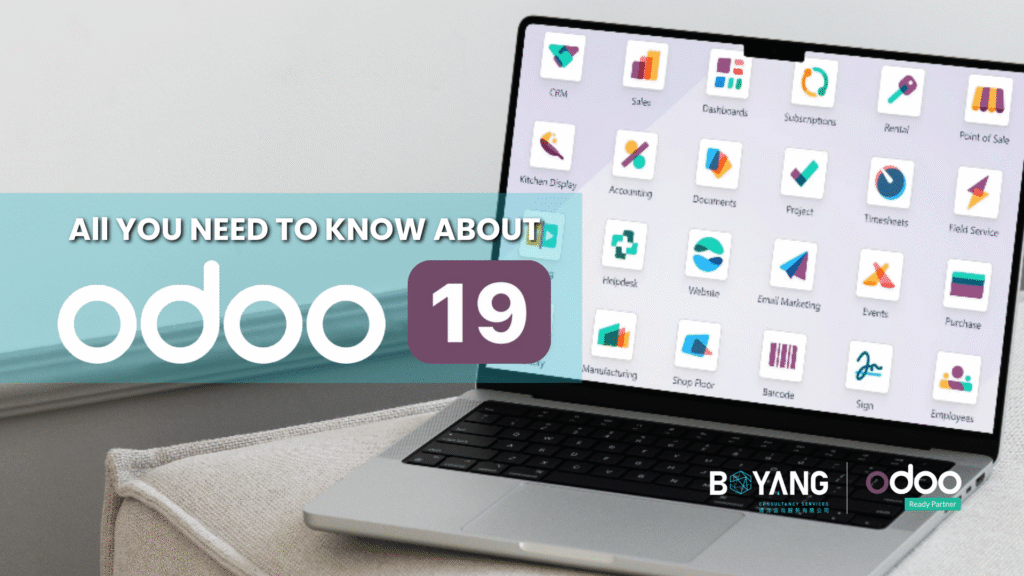
Odoo has already introduced it’s newest version, Odoo 19 for business in 2025 and this has already made big hype. But do you still questioning that is upgrading to Odoo 19 or embracing Odoo will worth for your business of not? Odoo, the all-in-one business management ERP, continues to be the backbone for organizations seeking streamlined, data-driven operations. Every year, Odoo releases upgraded versions that redefine efficiency, scalability, and automation to serve better to it’s users. With the upcoming release of Odoo 19, many users are asking a key question, is upgrading to Odoo 19 worth it?
This article provides a comprehensive details of Odoo 19, comparison between Odoo 18 and Odoo 19, including release dates, major features, usability improvements, and the business impact of upgrading to the latest Odoo version in 2025.
Odoo 18 and Odoo 19 Release Dates
Understanding each version’s release timeline helps evaluate its maturity, stability, and support roadmap.
-
Odoo 18 was officially launched in October 2024 during the Odoo Experience event in Brussels, Belgium.
-
Odoo 19 is expected to debut in September 2025, coinciding with the Odoo Experience 2025 Brussels event scheduled from September 18–20.
The Odoo 19 release represents a major leap toward intelligent automation and enhanced performance. It introduces AI-driven tools, ESG-focused modules, and UI refinements, all built to support both SMEs and global enterprises with greater flexibility and speed.
Key Highlights of Odoo 18
Odoo 18 was released in two editions, Community (free and open source) and Enterprise (with premium apps and professional support). Its development roadmap focused on improving inventory management, website building, manufacturing, and overall user experience.
Notable Features in Odoo 18
-
Revamped User Interface: Cleaner layouts and smoother navigation improved accessibility and productivity. Compared to Odoo 17, Odoo 18 feels faster, lighter, and more intuitive.
-
Upgraded Website Builder: Introduced native multilingual website support, making international expansion more seamless.
-
Enhanced Mobile Experience: Improved toolbar, mega menus, and mobile responsiveness for on-the-go users.
-
Readable URLs: Automatically generated SEO-friendly URLs for better visibility and link sharing.
-
Passkey Authentication: Introduced secure, passwordless login options for safer user access.
-
Sales & Marketing Automation: Added modules for automated sales commissions, loyalty programs, and advanced email customization.
-
Smarter Inventory Flow: Better push/pull configuration rules for more accurate stock management.
-
Manufacturing Upgrades: Enhanced Gantt charts, BOM structures, and real-time product lookups for streamlined production.
-
Improved POS System: Faster checkout, cleaner UI, mobile-friendly design, and more integrated payment gateways (WeChat Pay, Stripe, PayPal, etc.).
-
Advanced Accounting Tools: Automated reconciliations, budgeting by department, and analytics dashboards.
-
Power BI Integration: Enabled real-time analytics and advanced reporting inside Odoo.
-
Recruitment & Project Management Enhancements: Smarter candidate pipelines, burn-up charts, task dependencies, and time tracking tools.
Overall, Odoo 18 delivered a major leap in usability and automation, laying the foundation for the next-generation AI-driven updates in Odoo 19.
What’s New in Odoo 19 (Expected Features and Roadmap)?
The excitement around Odoo 19 is well-deserved. It’s designed to be the smartest and most user-friendly Odoo release to date, built around automation, scalability, and AI intelligence. Below are all Odoo apps that you will get in Odoo 19 version;
- Accounting: Manage financial and analytic accounting, reporting, and tax management with AI-driven bank reconciliation improvements.
- Invoicing: Handle invoices, payments, and customer follow-ups, with support for electronic invoicing and WhatsApp reminders.
- Expenses: Manage employee expenses and their automatic reconciliation.
- Documents: An integrated document management system.
- Spreadsheets: A built-in BI environment with AI query and advanced charting capabilities.
- Sign: For signing documents online.
- ESG: A new app to measure and report environmental, social, and governance (ESG) footprints.
- CRM: Track leads, opportunities, and utilize AI for lead scoring and conversation summaries.
- Sales: Manage the sales process from quotation to invoice, with flexible quoting options and online payments.
- Point of Sale (PoS): A complete PoS system for shops and restaurants, with features like QR code menus and quick payment buttons.
- Subscriptions: Manage recurring invoices and renewals.
- Rental: Manage rental contracts, deliveries, and returns.
- Inventory: Manage stock, logistics, and supply chain processes with AI-driven forecasting and improved barcode/RFID support.
- Manufacturing: Manage manufacturing orders, Bills of Materials (BoMs), and production planning.
- PLM: Product Lifecycle Management for engineering change orders.
- Purchase: Handle purchase orders, tenders, and vendor bills with a new supplier performance dashboard.
- Maintenance: Track equipment and manage maintenance requests.
- Quality: Control product quality through quality points and alerts.
- Barcode: An app for managing inventory operations via barcode scanning.
- Employees: Centralize employee information.
- Recruitment: Track the recruitment pipeline and job positions.
- Time Off: Allocate and track employee leave requests.
- Appraisals: Manage employee performance assessments.
- Referral: A system for managing employee referral programs.
- Fleet: Manage the company vehicle fleet and track associated costs.
- Payroll: For managing salaries and payroll reporting (often localization-dependent).
- Marketing Automation: Build and automate mailing campaigns.
- Email Marketing: Design, send, and track mass emails.
- SMS Marketing: Design, send, and track SMS campaigns.
- Social Marketing: Manage social media and website visitors from one place.
- Events: Publish events, manage registrations, and sell tickets.
- Survey: Create and share surveys.
- Live Chat: Communicate with website visitors in real-time, with AI agents for initial interactions.
- Project: Organize, plan, and schedule projects and tasks.
- Planning: Manage employee schedules and work shifts.
- Timesheet: Track employee time spent on tasks.
- Field Service: Schedule and track onsite operations and materials.
- Helpdesk: Track, prioritize, and solve customer support tickets.
- Appointments: Allow clients to book meetings or appointments directly.
- Discuss: An integrated chat, mail gateway, and private channel communication tool.
- Approvals: Create and manage various approval requests within the organization.
- IoT: Integration module for connecting Internet of Things devices.
- VoIP: Make and receive phone calls directly within Odoo.
- Knowledge: A new knowledge base app to manage internal company documentation.
- WhatsApp: Integration for sending messages via WhatsApp in various apps like invoicing and CRM.
- Website: An enterprise website builder with AI-powered content generation and SEO tools.
- eCommerce: Sell products online with new mobile-friendly designs and marketplace integrations.
- Blog: Publish blog posts, news, and announcements.
- Forum: Manage an online forum with Q&A features.
- eLearning: Manage and publish online courses and training.
Should You Upgrade from Odoo 18 to Odoo 19?
If you’re using Odoo 18, you’re already running a capable ERP. However, Odoo 19 brings a major shift, integrating AI, smarter analytics, and improved cross-module automation that redefine how businesses plan, sell, and manage operations.
Upgrading to Odoo 19 will help you:
-
Automate repetitive workflows with AI
-
Reduce manual errors in finance and inventory
-
Gain real-time insights through predictive analytics
-
Enhance UX with faster navigation and mobile optimization
-
Strengthen compliance and scalability for global operations
So, yes, if your goal is to modernize your business and stay competitive, upgrading to Odoo 19 in 2025 is a highly strategic move.
Why Choose Boyang for Odoo ERP Implementation and Upgrades?
Migrating to a new Odoo version isn’t just a technical task, it’s a transformation process.
That’s where Boyang comes in.
With 20+ years of experience in ERP implementation, migration, and support, Boyang helps businesses seamlessly transition from Odoo 18 to Odoo 19 without data loss or downtime.
Our services include:
-
Free Odoo system consultation
-
Odoo 18 to Odoo 19 migration
-
End-to-end implementation and upgrades
-
Technical support and user training
-
Post-launch performance optimization
Contact Boyang today for a free consultation and free product demo to explore our Odoo services page to decide Odoo 19 can modernize your business operations in 2025 with Boyang.
Wrap-up:
Each Odoo release builds on the last, and Odoo 19 continues that tradition by combining automation, AI, and user experience into a single, smarter ERP ecosystem.
If your business values speed, scalability, and innovation, now is the right time to plan your migration and take full advantage of Odoo v19 cutting-edge capabilities.