If you are new to web development, you have probably heard the terms front end and back end more times than you can count. They sound technical, but the ideas behind them are simple. This guide breaks down front end development and back end development in plain language, so you know exactly what each one means, how they work together, and which path might suit you better.
What Is Front End Development
Front end development is everything a user sees and interacts with on a website or app. It covers the layout, the colors, the buttons, the menus, and the way a page responds when you click or scroll. Think of it as the part of a house you walk through and touch every day: the doors, the furniture, the paint on the walls.
Front end developers use three core languages: HTML, CSS, and JavaScript. HTML builds the structure of a page. CSS controls how that structure looks. JavaScript adds interactivity, so a page can respond to clicks, form entries, and other user actions.
A front end developer’s job is to turn a design into a working, responsive interface. This means the website needs to look good and function well on a phone, a tablet, and a desktop screen. User interface design and user experience design are closely tied to front end work, since the goal is always to make a site easy and pleasant to use.
Common front end frameworks and libraries include React, Vue, and Angular. These tools help developers build complex interfaces faster and keep code organized as a project grows.
What Is Back End Development
Back end development is everything that happens behind the scenes. It is the engine room of a website or app. Users never see it directly, but they depend on it every time they log in, submit a form, search for a product, or load their data.
The back end handles server logic, databases, and application programming interfaces, often called APIs. When you enter your password on a login page, the back end checks it against stored data and decides if you get access. When you search for a product on an online store, the back end pulls matching results from a database and sends them back to the front end for display.
Back end developers work with server-side languages such as Python, PHP, Java, Ruby, and Node.js. They also manage databases like MySQL, PostgreSQL, and MongoDB, which store and organize all the information a website needs to run.
Server management, data security, and application performance all fall under back end responsibilities. A slow or unstable back end can make even the most beautiful front end design feel broken.
Front End vs Back End: The Core Differences
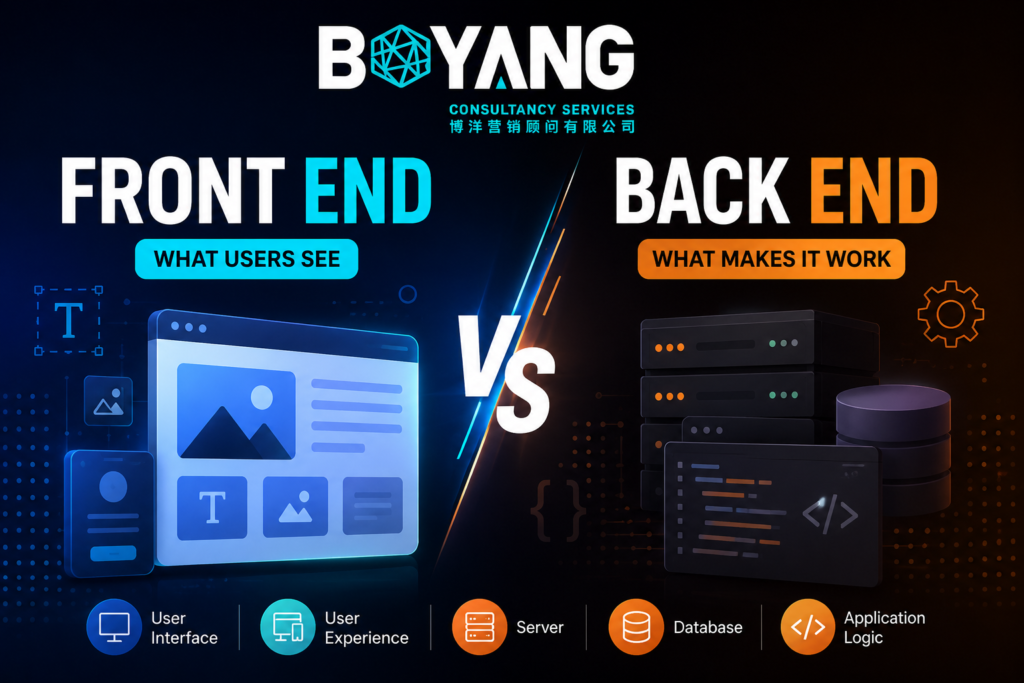
The easiest way to understand the difference is this: front end is what you see, back end is what makes it work.
Front end development focuses on:
- Visual design and layout
- User interaction and responsiveness
- Browser compatibility
- Client-side performance
Back end development focuses on:
- Server logic and application processes
- Database management
- Data security and user authentication
- API development and integration
A website needs both to function. The front end sends requests to the back end. The back end processes those requests, talks to the database, and sends data back to the front end. This exchange happens in seconds, often without the user noticing anything at all.
Skills You Need for Front End Development
If you want to become a front end developer, start with HTML and CSS. These are the foundation of every website. Once you understand structure and styling, move on to JavaScript, since it powers almost every interactive feature you see online.
After the basics, learn a front end framework such as React or Vue. Employers often look for developers who know at least one modern framework, since most companies build their interfaces this way today.
You also need a solid grasp of responsive design. Websites must work across different screen sizes, and this skill separates beginner developers from job-ready ones. Version control tools like Git are equally important, since almost every development team uses them to manage code changes.
Skills You Need for Back End Development
Back end development requires a different mindset. You need to understand how servers work, how data moves between systems, and how to keep that data secure. Start with one server-side language. Python and JavaScript through Node.js are popular choices for beginners because of their readability and large support communities.
Database knowledge is essential. Learn how to write queries, design database schemas, and manage relationships between different pieces of data. SQL is a must-know skill, and many back end developers also learn NoSQL databases like MongoDB for more flexible data storage.
You should also understand APIs, since this is how the front end and back end communicate. RESTful APIs are the most common standard, and learning how to build and consume them is a core back end skill.
Which Path Should Beginners Choose
There is no single right answer here. Your choice depends on what you enjoy and how you think.
Choose front end development if you enjoy visual design, care about how things look and feel, and want to see immediate results from your code. Front end work gives you fast feedback since you can see your changes in the browser right away.
Choose back end development if you enjoy problem-solving, logic, and working with data. Back end work is less visual but often involves more complex thinking around efficiency, security, and system architecture.
Many developers also choose to become full stack developers, which means learning both front end and back end skills. Full stack development gives you a complete picture of how web applications work, and it often makes you more valuable in the job market since you can handle a project from start to finish.
Front End and Back End Salaries
Salaries vary depending on location, experience, and the specific technologies you know, but both paths offer strong earning potential. Back end developers sometimes earn slightly more due to the complexity of server-side systems and database management, but front end developers with strong framework skills and design sense are equally in demand.
Full stack developers often command the highest salaries, since they bring a wider range of skills to a team and reduce the need for hiring separate specialists.
Career Growth in Front End and Back End Development
Both fields offer strong long-term career paths. Front end developers can grow into roles like UI or UX designer, front end architect, or product engineer. Back end developers often move into roles such as software architect, database administrator, or DevOps engineer.
The demand for web developers continues to grow as more businesses build digital products. Learning either front end or back end development opens the door to freelance work, remote jobs, and long-term career stability in tech.
Final Thoughts
Front end and back end development are two sides of the same coin. One builds what users see, the other builds what makes it work. Neither is better than the other, they simply serve different purposes within the same system.
If you are just starting out, try building small projects in both areas before committing to one path. This hands-on experience will show you which side of web development excites you more, and that excitement is often the best guide for choosing your career direction.