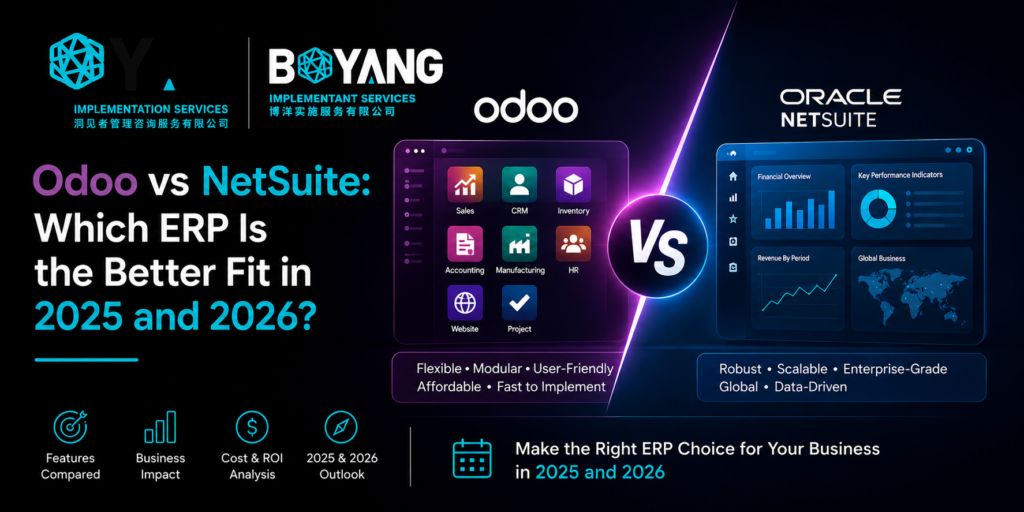
Choosing between Odoo and NetSuite is one of the most common ERP decisions mid-market and growing businesses face today. Both platforms cover core business operations, but they serve different types of companies at different price points. This Odoo vs NetSuite comparison breaks down pricing, features, deployment, industry fit, and support so you know exactly what you are getting before you commit.
What Is Odoo?
Odoo is an open-source ERP suite built on a modular structure. You start with the modules you need and add more as your business grows. It covers accounting, inventory, CRM, manufacturing, HR, ecommerce, and project management under one platform.
The open-source foundation means you get full access to the source code. You hire a developer or partner to customize it, or you use the hosted SaaS version with less flexibility but easier setup. Odoo is popular with small to mid-sized businesses that want broad ERP functionality without paying enterprise-level license fees.
What Is NetSuite?
NetSuite is a cloud ERP platform owned by Oracle. It targets mid-market and enterprise businesses that need strong financial management, multi-entity consolidation, and global operations support. NetSuite includes financials, CRM, inventory, order management, and ecommerce in a unified cloud system.
Unlike Odoo, NetSuite runs on a single cloud infrastructure. You do not manage servers or worry about upgrades. Oracle handles all of that. This makes NetSuite a hands-off option for finance-heavy organizations that need consistent uptime and compliance tools out of the box.
Odoo vs NetSuite: Pricing Comparison
Pricing is where these two platforms diverge the most.
Odoo offers a Community edition that is completely free. The Enterprise edition starts at roughly $24.90 per user per month and goes up depending on which modules you activate. Implementation costs vary, but the licensing itself is among the lowest in the ERP market.
NetSuite does not publish pricing publicly. Based on widely reported estimates, NetSuite licensing starts at around $999 per month for the base platform, plus $99 per user per month. Annual contracts are standard. Implementation costs regularly run from $25,000 to well over $100,000 depending on complexity.
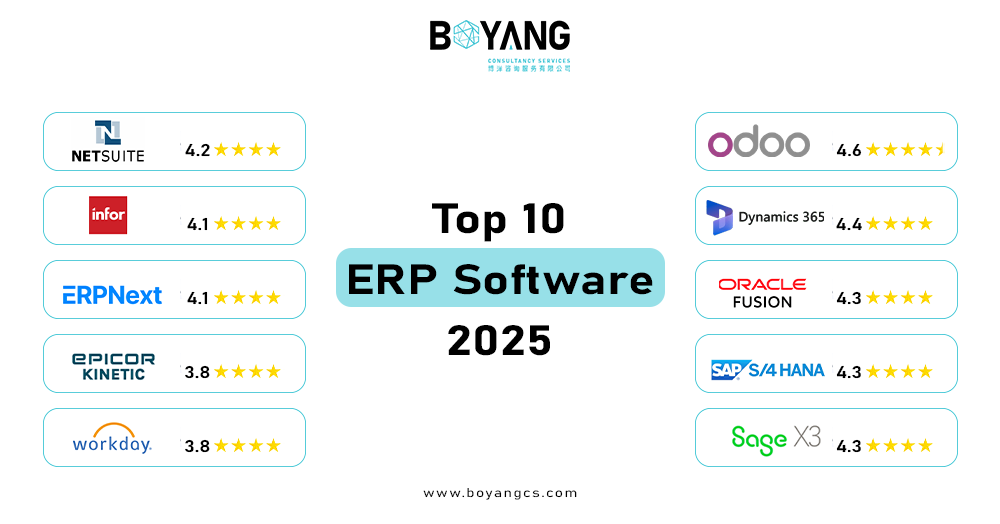
For businesses comparing ERP costs across Odoo, SAP, NetSuite, and Microsoft Dynamics 365, Odoo consistently comes in as the most affordable cloud ERP option. NetSuite sits in the mid-to-upper range, cheaper than SAP S/4HANA on most configurations but more expensive than Odoo at nearly every tier.
If budget is your primary concern and you have technical resources to handle setup and customization, Odoo gives you more for less. If you need a predictable, managed cloud ERP with strong financial controls and can absorb higher costs, NetSuite is worth the premium.
Features Comparison
Financial Management
NetSuite has stronger out-of-the-box financial management. It handles multi-currency, multi-entity consolidation, revenue recognition, and audit trails in ways that satisfy public companies and businesses with complex reporting requirements. Its financial module is mature and built for finance teams that live in the system daily.
Odoo accounting covers the basics well. It handles invoicing, bank reconciliation, tax management, and basic financial reporting. For many SMBs, this is enough. For companies with subsidiaries across multiple countries or with public reporting obligations, Odoo’s financial module requires significant customization to match what NetSuite delivers natively.
Inventory and Manufacturing
Odoo has a strong manufacturing module. It supports bills of materials, work orders, routings, and quality control. For manufacturers comparing Odoo vs NetSuite, Odoo often wins on manufacturing depth, especially at mid-market price points. The manufacturing module is well integrated with inventory, purchasing, and sales.
NetSuite inventory management is solid for distribution and wholesale businesses. It handles warehouse management, lot and serial tracking, and demand planning. But for complex manufacturing workflows, NetSuite often requires third-party add-ons or customization to match what Odoo handles natively.
CRM and Sales
Both platforms include CRM. Odoo CRM is visually clean and integrates tightly with the rest of the Odoo suite. You get pipeline management, lead scoring, email marketing, and live chat in one system.
NetSuite CRM is functional but not known as a standout product. Many NetSuite users run Salesforce or HubSpot alongside NetSuite rather than relying on the native CRM. If CRM is central to your operations, Odoo delivers a more complete and user-friendly experience at no extra cost.
Ecommerce
Odoo has a built-in ecommerce module that connects directly to your inventory, accounting, and CRM. You build and manage your online store inside the same system you use for everything else. For businesses comparing Odoo vs NetSuite vs SAP Business One vs Microsoft Dynamics 365 for ecommerce, Odoo is a strong choice.
NetSuite SuiteCommerce is NetSuite’s ecommerce offering. It is more powerful for larger operations with complex B2B or multi-store requirements, but it comes with additional costs and a steeper implementation curve.
Reporting and Analytics
NetSuite’s reporting tools are more robust for financial and operational reporting. SuiteAnalytics offers customizable dashboards, saved searches, and drill-down reports that work well for CFOs and operations managers who need real-time visibility across business units.
Odoo reporting covers standard operational reports but lacks the depth NetSuite offers for complex financial analysis. Many growing Odoo users integrate third-party BI tools like Power BI or Metabase to fill this gap.
Deployment and Implementation
NetSuite is cloud-only. Oracle manages the infrastructure, updates, and security patches. You do not need an in-house IT team to keep the system running. This reduces internal overhead significantly, which is part of why CFOs at mid-market companies favor it.
Odoo gives you three paths. The Community edition runs on your own server. The Enterprise edition runs on Odoo.sh or your own infrastructure. The SaaS version (odoo.com) is fully hosted with limited customization. The flexibility is an advantage if you have technical resources. It is a burden if you do not.
Implementation timelines differ as well. Odoo implementations for small businesses with fewer customizations take two to four months. NetSuite implementations typically run three to six months for mid-market companies, sometimes longer for enterprises with complex integrations.
For businesses asking which ERP is easier to deploy, Odoo wins for basic setups. NetSuite wins for enterprises that need a guided, structured implementation with strong partner support networks.
Industry Fit
Manufacturing
Odoo is a strong fit for small to mid-sized manufacturers. Its native MRP, quality management, and shop floor control modules are well developed and cost significantly less than comparable NetSuite configurations.
Distribution
NetSuite is a common choice for distributors, especially those with multi-warehouse operations or international supply chains. Its demand planning and order management tools are built for distribution at scale.
Services and Professional Services
NetSuite has strong project accounting and resource planning tools. It is a popular choice for professional services firms, agencies, and IT companies that need to track projects, time, and billing in one place.
Odoo’s project management and timesheet modules work well for smaller services businesses. As project complexity grows, many users find NetSuite’s project accounting more capable.
Retail and Ecommerce
Odoo handles retail and ecommerce well for businesses that want everything in one system without complex integrations. NetSuite SuiteCommerce suits larger retailers with omnichannel requirements, particularly those managing multiple storefronts or B2B portals.
Startups and SMBs
For startups and small businesses, Odoo is the clearer choice. Lower entry costs, a free Community edition, and modular growth make it accessible from day one. NetSuite’s pricing structure makes it harder to justify for companies under $5 million in annual revenue.
Customization and Integrations
Odoo’s open-source architecture gives developers direct access to the codebase. You modify modules, build custom workflows, and integrate third-party tools without depending on a vendor’s approval or pricing. The Odoo App Store has thousands of community and partner modules covering most business scenarios.
NetSuite uses SuiteScript, its proprietary scripting language, for customizations. Customizations are powerful but require certified NetSuite developers. Oracle maintains control over the platform, which means your customizations need to survive Oracle’s regular upgrade cycles. This is manageable but adds long-term maintenance costs.
For companies comparing ERP customization capabilities, Odoo offers more freedom. NetSuite offers more structure, which is a benefit for organizations that want guardrails.
Support and Ecosystem
NetSuite has a large, global partner network. Oracle provides direct support, and hundreds of certified implementation partners offer industry-specific expertise. Training resources, documentation, and community forums are extensive.
Odoo also has a wide partner network. Odoo SA provides official support for Enterprise subscribers. The open-source community is active and generates a large volume of documentation, tutorials, and modules. For basic support, community resources are often enough. For complex enterprise needs, you rely on a local or regional Odoo partner.
Odoo vs NetSuite: Summary Table
| Factor | Odoo | NetSuite |
|---|---|---|
| Starting Price | Free (Community) / ~$25/user/month Enterprise | ~$999/month base + $99/user |
| Deployment | Cloud, on-premise, or hybrid | Cloud only |
| Manufacturing | Strong, native MRP | Requires add-ons for advanced MRP |
| Financial Management | Solid for SMBs | Enterprise-grade, multi-entity |
| Ecommerce | Built-in, integrated | SuiteCommerce, extra cost |
| Customization | High (open source) | High but proprietary |
| Implementation Time | 2 to 4 months (basic) | 3 to 6 months+ |
| Best For | SMBs, manufacturers, budget-focused | Mid-market, finance-heavy, global ops |
Which One Should You Choose?
Choose Odoo if you are a small to mid-sized business with a tight budget, technical resources for customization, and a need for broad functional coverage across manufacturing, ecommerce, and operations.
Choose NetSuite if you are a mid-market or enterprise company with complex financial reporting requirements, multi-entity operations, or international subsidiaries. NetSuite’s managed cloud infrastructure and financial controls are worth the cost if your business has outgrown smaller ERP tools.
Both platforms have strong ecosystems, active development roadmaps, and proven track records across industries. The right choice depends on your company’s size, budget, technical capacity, and where you plan to be in three to five years.
If you are still evaluating options, comparing your shortlist against your specific workflows, integration needs, and total cost of ownership is the most reliable way to make the final call.
Boyang Consultancy Services is a certified Odoo partner in Hong Kong with 20+ years of IT experience across manufacturing, logistics, and retail.