Choosing between Odoo and SAP is one of the biggest decisions you will make when picking software to run your business. Both platforms manage core functions like accounting, sales, inventory, and HR, but they are built for different types of companies. Your choice depends on your company size, your budget, your industry, and how fast you plan to grow. This guide breaks down Odoo vs SAP so you can pick the system that actually fits your business, not just the one with the bigger name.
Odoo or SAP for Small and Medium Businesses
For small and mid sized businesses that want to move fast and stay flexible, Odoo is usually the stronger choice. It is modular, easy to learn, and far more affordable than SAP. You can start with a few apps like CRM, Sales, or Inventory, then add more as your business grows. You never have to commit to one giant system on day one.
SAP, especially SAP S/4HANA, is built for large, global enterprises. It handles complex, end to end operations well, but it asks for a serious investment of time, money, and technical staff. That level of commitment is often out of reach for smaller companies.
Odoo vs SAP Business One: Which Fits Smaller Teams Better
SAP does have a product aimed at smaller companies, called SAP Business One. It is a lighter version of SAP built for small and mid sized businesses, so the fairer comparison for many readers is Odoo vs SAP Business One rather than Odoo vs the full S/4HANA suite.
SAP Business One covers finance, sales, inventory, and basic reporting. It works well for companies that already run on SAP standards or plan to grow into the larger SAP ecosystem later. The tradeoff is cost and flexibility. SAP Business One licensing and implementation still cost more than Odoo, and customizing it usually needs a certified SAP partner.
Odoo covers the same core areas and adds website, e-commerce, marketing, HR, and manufacturing tools in the same system, all for a lower starting price. If your business needs an all in one platform without hiring a specialist for every change, Odoo is the more practical pick. If you are already deep in the SAP ecosystem for compliance or supply chain reasons, SAP Business One keeps you in that world.
Odoo vs SAP S/4HANA and SAP ECC
SAP has moved most of its enterprise customers toward SAP S/4HANA, its current flagship system. The older SAP ECC, also called SAP Business Suite 7, is being phased out, with mainstream support ending in 2027. Companies still running SAP ECC face a choice: upgrade to S/4HANA at high cost, or use the migration deadline as a chance to look at alternatives like Odoo.
Odoo vs SAP S/4HANA comes down to scale and speed. S/4HANA offers deep, industry specific tools for large enterprises with complex compliance needs, especially in finance, pharma, and manufacturing at scale. Odoo deploys faster, costs less to implement, and gives small to mid sized teams most of the same core functionality without the multi year rollout.
Odoo vs SAP: Pros and Cons
Odoo Pros:
The open source Community version is free, making it a strong choice for budget conscious businesses. Odoo offers 70 plus business apps in 30 plus languages, covering CRM, manufacturing, sales, accounting, e-commerce, HR, project management, website building, and hosting in one platform. Apps install with one click, often within an hour. All apps work across devices, including offline. You can start with the basics and add features as your business grows. Odoo Studio lets you adjust the system to match your workflow without heavy coding. The interface is clean and modern, easy to learn even for non technical staff. Shared data across departments improves teamwork, and automated workflows cut down on manual work. A large, active global community provides support, plugins, and shared solutions.
Odoo Cons:
Initial setup can be tricky and often needs a certified expert. Deployment takes longer when you roll out many modules at once. Features like auto scheduling may need extra development. Only certified Odoo developers are typically equipped to handle custom projects well. Pricing per module can make budgeting more complex for smaller teams. Custom setups can break during version upgrades. Not every Odoo partner offers the same quality, so it takes some effort to find a certified one like Boyang.
SAP Pros:
SAP is built for large enterprises managing vast amounts of data. It delivers strong business intelligence tools for data driven decisions and automates complex operations to reduce human error. It supports multiple languages, currencies, and compliance standards, which suits large global operations. SAP handles large scale, complex organizational structures with strong security for sensitive data. It integrates easily with third party tools and legacy systems, supports mobile access, and offers predictive analytics for strategic planning.
SAP Cons:
High licensing, setup, and maintenance costs make SAP a tough fit for small and medium businesses. The interface is complex and requires real training. Setup and customization can take months or longer, slowing down return on investment. Most changes require certified SAP consultants. Some tools feel dated compared to newer platforms. Total cost is hard to pin down without a direct consultation, and hidden costs can appear. Running SAP well usually requires dedicated IT staff and outside consultants. The system can be rigid and slow to adapt for younger, fast moving businesses. Some SAP products, like RISE with SAP, restrict infrastructure choices. Features like payroll often require separate add ons.
Odoo vs SAP: Pricing Comparison
Cost is one of the clearest differences between Odoo and SAP.
Odoo offers a free, open source Community edition and a paid Enterprise edition. Pricing is subscription based and modular, so you only pay for the apps you use. This makes it easier to scale your software spend as your business grows.
SAP comes with higher upfront costs. Licensing, implementation, and maintenance fees can reach six figures, especially for medium and large enterprises. SAP Business One brings the entry price down, but it is still higher than Odoo for a comparable set of features.
If you want predictable, transparent pricing that scales with your business, Odoo is the clearer option.
Key Differences Between Odoo and SAP
|
Feature |
Odoo |
SAP |
|
Target Audience |
SMEs and startups |
Large enterprises |
|
Pricing |
Affordable |
Higher |
|
Deployment |
On-premise, cloud, or hybrid |
Primarily cloud or on-premise |
|
Customization |
High (open source) |
Limited, requires SAP consultants |
|
User Interface |
Easy and modern |
Complex and rigid |
|
Time to Implement |
Weeks to months |
Often 6 to 12+ months |
|
Industry Fit |
Flexible for many sectors |
Deep vertical focus (finance, pharma, and more) |
If you work in manufacturing, take a closer look at how Odoo handles manufacturing specific workflows. It has become a common choice for companies that need flexible, scalable production management.
Odoo vs SAP: Features Comparison
Both Odoo and SAP cover a wide range of ERP features, but they approach it differently.
Odoo includes Sales, CRM, Inventory, Accounting, HR, Manufacturing, Marketing Automation, and Helpdesk, all integrated under one dashboard with apps that work together out of the box.
SAP offers highly advanced financial management, supply chain optimization, global compliance tools, and predictive analytics. Most modules come with separate licenses and require trained consultants to configure.
If you value flexibility, cost control, and a clean interface that scales with you, Odoo is the stronger fit. For large, global, compliance heavy organizations with complex processes, SAP remains a dominant option.
Odoo vs SAP: User Experience
|
Feature |
Odoo |
SAP |
|
Interface |
Clean, modern, web-based UI, easy for all users |
Traditional interface, improved with SAP Fiori, still complex |
|
Ease of Use |
Intuitive and beginner-friendly |
Requires structured training and onboarding |
|
Setup Time |
Quick deployment with one-click app installation |
Lengthy setup, often requires certified consultants |
|
Customization |
Easily customizable via Odoo Studio, no heavy coding |
Customization possible but complex, often needs developers |
|
Learning Curve |
Low, suitable for non-technical teams |
High, suitable for enterprise IT teams |
|
Speed |
Fast and responsive |
Can be slower due to system complexity |
|
Onboarding Experience |
Fast and user-friendly |
Time-consuming and training-intensive |
Odoo gives you a faster, more intuitive experience out of the box, which works well for teams without a dedicated IT department. SAP is built for the scale and complexity of large organizations, and it shows in the learning curve.
Odoo vs SAP vs Oracle vs NetSuite: How They Compare
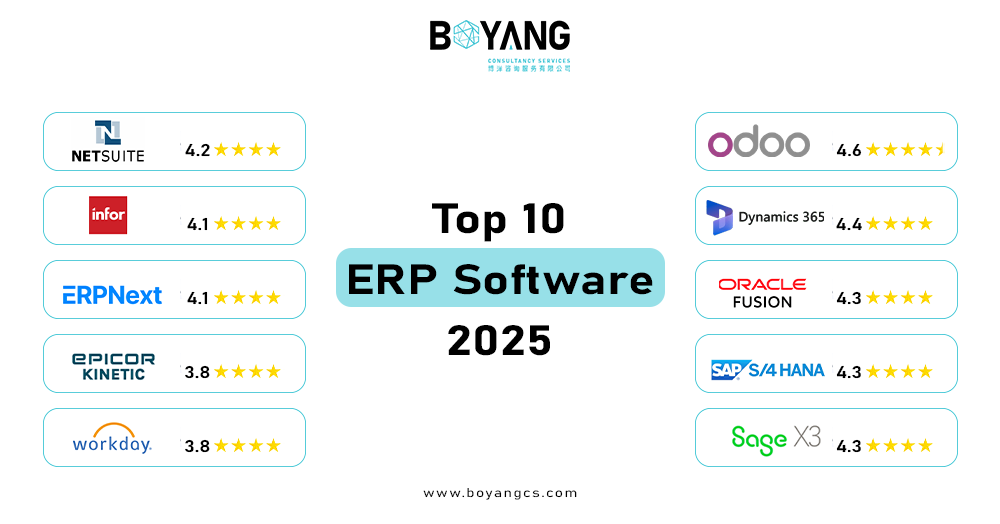
Odoo is not the only alternative to SAP. Oracle NetSuite and Microsoft Dynamics 365 both compete in the same space, so many buyers research Odoo vs SAP vs Oracle before deciding.
Oracle NetSuite is cloud native and strong for finance heavy, multi entity businesses, but licensing runs higher than Odoo and customization needs Oracle certified developers. SAP remains the strongest choice for very large, highly regulated enterprises with global supply chains. Odoo offers the widest range of built in apps at the lowest starting cost, which makes it the practical choice for SMEs, startups, and mid sized companies that want to grow into more modules over time.
What Is Odoo? Company Background
Odoo was founded in Belgium in 2005 by Fabien Pinckaers, who started the project as Tiny ERP while studying computer science. The company was renamed OpenERP in 2009, then became Odoo in 2014 as its scope grew beyond traditional ERP. Odoo is a Belgian company, not an Indian one, though it does run a development office in India along with offices across the US, Luxembourg, and Hong Kong. Odoo runs on the PostgreSQL database and is used by more than 16 million people across over 120 countries, including large manufacturers like Toyota Material Handling.
Frequently Asked Questions
Which is better, SAP or Odoo?
Neither system is better in every situation. Odoo is better for small and mid sized businesses that want an affordable, all in one platform they can set up quickly. SAP is better for large enterprises with complex, global operations, deep compliance needs, and the budget to support a long implementation.
Is Odoo a CRM or an ERP?
Odoo is a full ERP system that includes a CRM module. You can use Odoo CRM as a standalone app or run it alongside accounting, sales, inventory, and other apps on the same platform.
What database does Odoo use?
Odoo runs on PostgreSQL, an open source relational database.
Who created Odoo, and when did it launch?
Fabien Pinckaers created Odoo. He started the project in 2002 as Tiny ERP, registered the software in 2005, and the platform took the Odoo name in 2014.
Is Odoo an Indian company?
No. Odoo is headquartered in Belgium. It has an office and development team in India, but the company itself is Belgian.
Did SAP acquire Odoo?
No. This is a rumor that has circulated online, including as an April Fools joke. As of 2026, SAP and Odoo remain separate, competing companies, with no official announcement of an acquisition or merger.
Can Odoo integrate with SAP?
Yes. Businesses that run SAP for some functions and Odoo for others can connect the two systems through API integrations, though this usually needs a developer familiar with both platforms.
Is Odoo reliable for a growing manufacturing company?
Yes, for many mid sized manufacturers. Odoo Manufacturing supports production planning, quality control, and inventory tracking. For a company around 100 employees weighing Odoo vs SAP Business One, Odoo usually costs less to implement and gives more flexibility to customize workflows without hiring outside consultants for every change.
Final Thoughts
Enterprise resource planning software exists to help you run your business with less manual work and fewer mistakes. The real question is not which system is objectively superior, it is which one fits how your business actually operates. If you value cost efficiency, fast deployment, and an easy learning curve, Odoo is worth a serious look. If you run a large, global organization with deep compliance requirements and the budget to match, SAP remains a strong option.
Need help deciding between Odoo and SAP, or planning a migration from SAP to Odoo? Our certified Odoo experts can walk you through your options. Contact us today for a free consultation.