Choosing between Odoo and Microsoft Dynamics 365 is one of the more consequential ERP decisions a growing business faces today. Both platforms handle the core functions of business management, but they are built for different problems, different scales, and very different budgets. This comparison breaks down pricing, features, deployment, customization, and scalability so you have a clear picture before committing.
What Is Odoo?
Odoo started as an open-source project in Belgium in 2005 under the name TinyERP. It went through a rebrand to OpenERP and eventually became Odoo, evolving into one of the more widely adopted modular ERP platforms on the market. Today it covers over 80 integrated apps, including accounting, CRM, inventory, manufacturing, HR, and eCommerce, all operating on a single shared database. That unified architecture reduces data fragmentation and simplifies how information flows across departments.
Odoo targets small to mid-sized businesses. Its strength is flexibility. Companies can activate only the modules they need, then expand as operations grow, without purchasing an entirely new platform or managing multiple product tiers.
What Is Microsoft Dynamics 365?
Microsoft Dynamics 365 is not a single product. It is a collection of separately licensed business applications sold under one brand. The suite includes Business Central for mid-market ERP, Finance and Supply Chain Management for enterprise operations, Sales, Customer Service, Commerce, and Human Resources. Each product carries its own price, its own implementation requirements, and its own partner ecosystem.
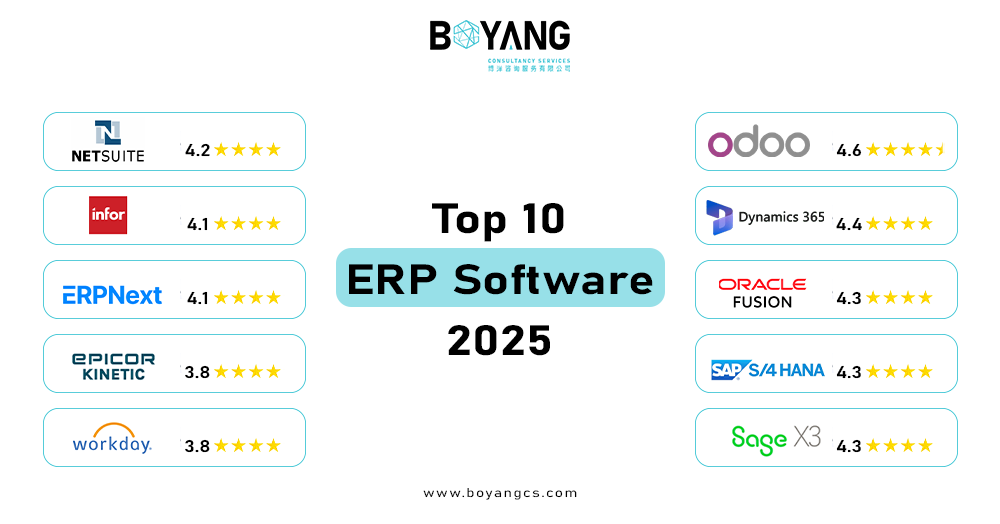
Dynamics 365 is built on Microsoft Azure and integrates natively with Microsoft 365, Power BI, Teams, and Copilot AI. For organizations already running on Microsoft infrastructure, it presents a familiar environment. That familiarity has real value, though it also comes with costs that extend beyond the base license.
Pricing and Total Cost of Ownership
The cost difference between these two platforms is significant and compounds over time.
Odoo Enterprise pricing in 2026 starts at roughly $24.90 per user per month on the Standard plan. The Custom plan, which includes Odoo Studio, multi-company support, and on-premise deployment options, runs approximately $10.90 per user per month on an annual basis. Odoo also offers a free tier covering a single app for unlimited users, which works for very early-stage businesses testing the platform.
Microsoft Dynamics 365 Business Central starts at $80 per user per month for the Essentials plan and $110 per user per month for the Premium plan, following a price increase in November 2025. The Finance and Supply Chain Management products for larger enterprises run on custom pricing. Beyond the base license, most Dynamics implementations require Microsoft 365, Power BI, and Azure services, none of which are included in the ERP license.
Total cost of ownership tells a clearer story. Odoo implementations typically land between $10,000 and $80,000. Microsoft Dynamics 365 implementations commonly range from $150,000 to over $1 million. That gap widens as user count and operational complexity increase.
Implementation Time
Deployment timelines differ sharply. Odoo takes between one and four months for most small to mid-sized implementations. Its modular structure supports phased rollouts, which reduces deployment risk and cuts initial downtime. Businesses get operational faster and add functionality incrementally rather than front-loading every configuration decision.
Microsoft Dynamics 365 typically takes six to fourteen months. Enterprise rollouts require structured planning, data migration workshops, and specialist consultants. The longer timeline is not a flaw for organizations that need that level of governance, but it carries cost and disruption implications that smaller teams rarely budget for correctly at the start.
Features and Module Depth
Both platforms cover the full range of standard ERP functions: finance, inventory, sales, purchasing, HR, manufacturing, and project management. The difference is not which features exist but how deep and how rigid they are.
Odoo’s modules work from a unified data architecture. Accounting, CRM, and inventory all feed into the same database, so cross-department reporting does not require custom connectors. The platform is known for a clean interface that most teams find straightforward to adopt. Configuration is generally accessible without heavy developer involvement.
Dynamics 365 goes deeper in specific enterprise functions. Multi-entity financial consolidation, global compliance, advanced manufacturing controls, and complex supply chain planning are areas where Dynamics maintains a clear advantage at scale. Dynamics 365 also leads on AI integration, with Copilot features embedded into Business Central workflows that can automate routine financial reporting and surface predictive insights.
For companies running across multiple countries with diverse regulatory requirements, Dynamics 365 carries more native infrastructure for that complexity. Odoo handles multi-company and multi-currency operations, but very large global deployments can require significant additional configuration.
Customization and Flexibility
Odoo’s open-source architecture gives developers full access to the codebase. Businesses can build custom modules, adjust workflows, and integrate third-party tools without being gated by vendor approval processes. Configuration for most common adjustments does not require deep coding knowledge.
Dynamics 365 is customizable but the process is more controlled. Modifications typically require specialist developers and extend both timeline and cost. Some organizations report that changing a workflow in Dynamics takes multiple consulting sessions where the same change in Odoo would take hours. For businesses with fast-changing processes or niche operational requirements, that rigidity adds friction.
Deployment Options
Odoo offers cloud, on-premise, and hybrid deployment. Odoo Online is the hosted cloud option. Odoo.sh provides a platform-as-a-service environment for businesses that need cloud hosting with more control. Self-hosting is available for organizations that require full data ownership.
Dynamics 365 is cloud-first, hosted on Azure. On-premise options exist through older Dynamics NAV or GP versions, but the current 365 suite is built around Azure infrastructure. Organizations in regulated industries or jurisdictions with strict data residency requirements sometimes find this constraining.
Scalability
Odoo scales well for companies moving from startup through mid-market. The phased module approach means you add capacity as the business grows rather than paying for functionality you are not using. For organizations in the 10 to 500 employee range, this model keeps costs proportional to actual operational needs.
Dynamics 365 is built for scale at the enterprise level. Multi-region deployments, multi-currency consolidation, and multi-entity governance across thousands of users are areas where Azure infrastructure and Microsoft’s global compliance coverage provide real structural advantages. Companies operating at that scale, or planning to reach it, are the ones who get the most return from Dynamics 365’s architecture.
Integrations and Ecosystem
Dynamics 365’s deepest advantage is its native integration with the Microsoft stack. If your business already runs on Microsoft 365, Teams, Excel, and Azure, adding Dynamics creates genuine operational continuity. Power BI connects directly for advanced analytics. Copilot AI works natively within the platform. That ecosystem coherence is real and should not be discounted.
Odoo integrates with third-party tools through its API and an active app marketplace. Native connectors exist for common platforms. For businesses not embedded in Microsoft infrastructure, Odoo’s integration approach covers most operational needs without forcing adoption of additional vendor products.
Who Should Choose Odoo?
Odoo works best for businesses with 10 to 500 employees that need a scalable, affordable ERP without enterprise-tier overhead. It suits companies where implementation speed matters, customization flexibility is a priority, and the total technology budget does not support a large Dynamics rollout. Industries like manufacturing, retail, healthcare, logistics, and services have all deployed Odoo successfully. If your organization does not already run on deep Microsoft infrastructure, Odoo delivers strong ROI for the investment.
Who Should Choose Microsoft Dynamics 365?
Dynamics 365 makes sense for mid-to-large enterprises, particularly those already operating within the Microsoft ecosystem. Companies with complex global operations, multi-entity financial structures, strict compliance requirements, or enterprise governance needs are the ones where Dynamics 365’s depth justifies the cost and implementation timeline. If Power BI, Microsoft Teams, Azure, and Microsoft 365 are already central to how your organization works, Dynamics 365 extends that environment rather than replacing it.
The Bottom Line
Odoo and Microsoft Dynamics 365 solve the same category of problem but from different starting points. Odoo is faster to deploy, significantly cheaper, and more flexible. Dynamics 365 is more powerful at enterprise scale and more tightly integrated with the Microsoft ecosystem. The right choice depends on your company size, budget, operational complexity, and the technology infrastructure you already have in place. For most small and mid-sized businesses, Odoo delivers more value per dollar. For large enterprises with complex global operations and existing Microsoft infrastructure, Dynamics 365 earns its cost.
For businesses evaluating their options in the region, our guide to Odoo implementation in Hong Kong covers the full process from scoping to go-live.